eHOMD has been updated to version
4.1Φ.
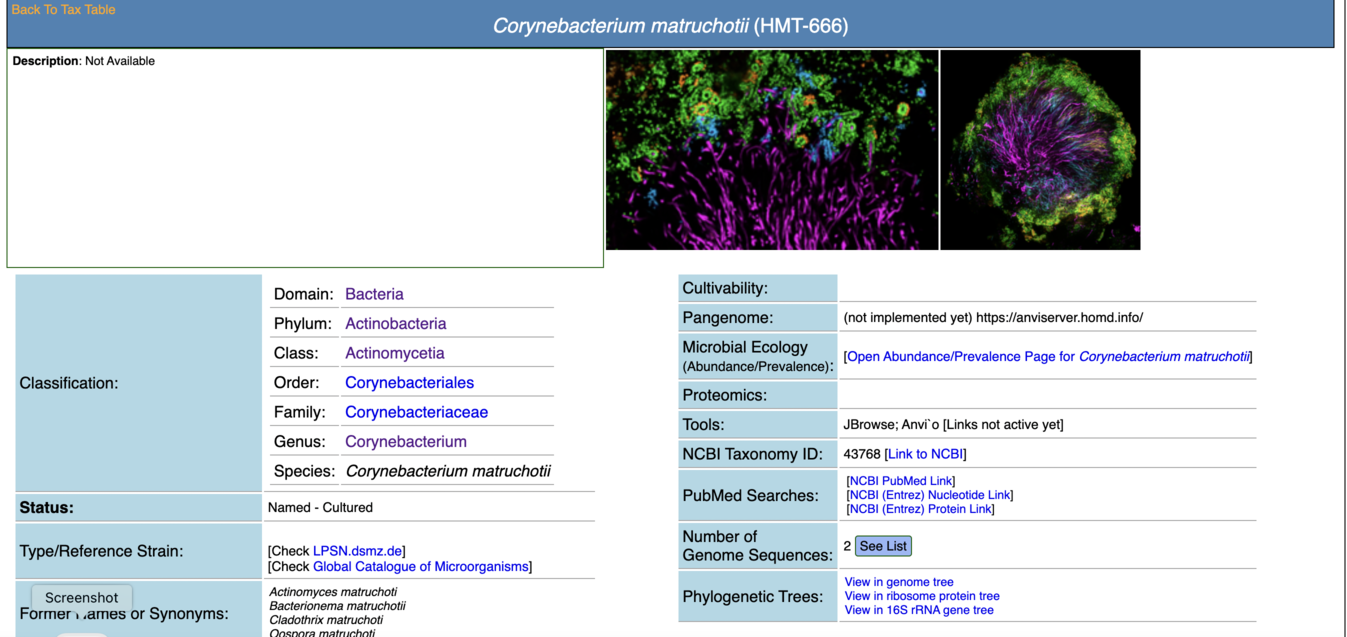
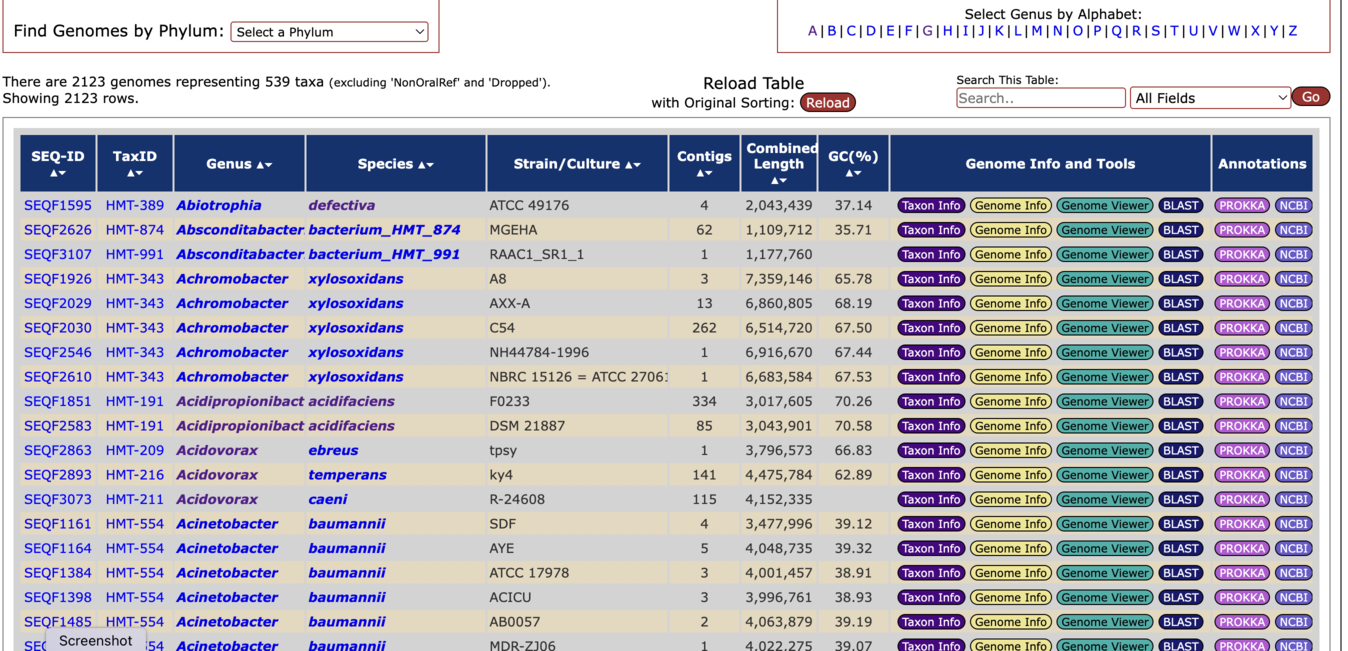
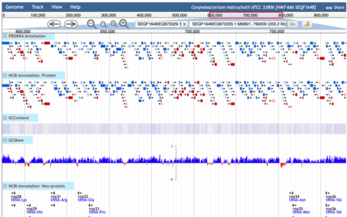
With this update, a beta version of prophage predictions for all genomes in the eHOMD, is included.
We are also transforming the database to a taxonomy based on whole-genome sequence information,
while still including 16S rRNA gene-based taxonomy to retain oral taxa known only from their rRNA genes.
In this major update, we are adding 44 human oral taxa as well as deleting taxa that whole-genome
sequences reveal to be redundant. We present expanded information to indicate which organisms in
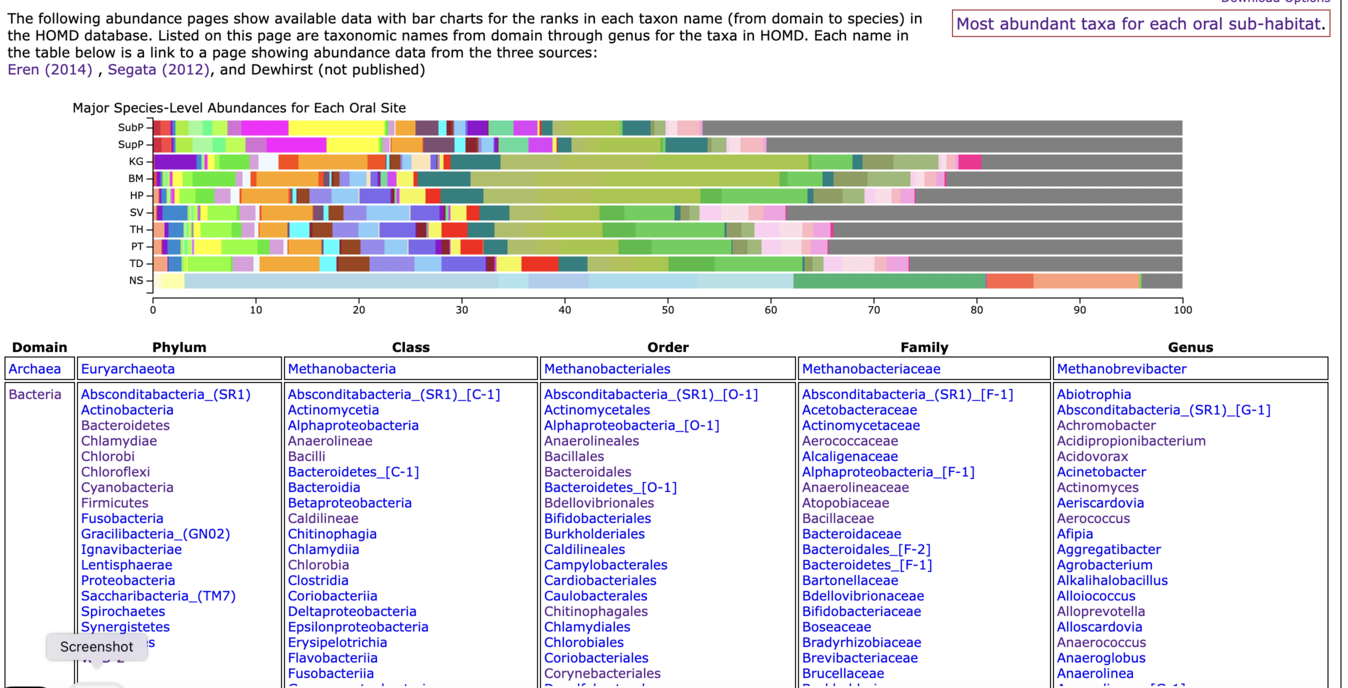
eHOMD are primarily oral or nasal and which can be found in the mouth but primarily reside at a different body
site or in the environment.
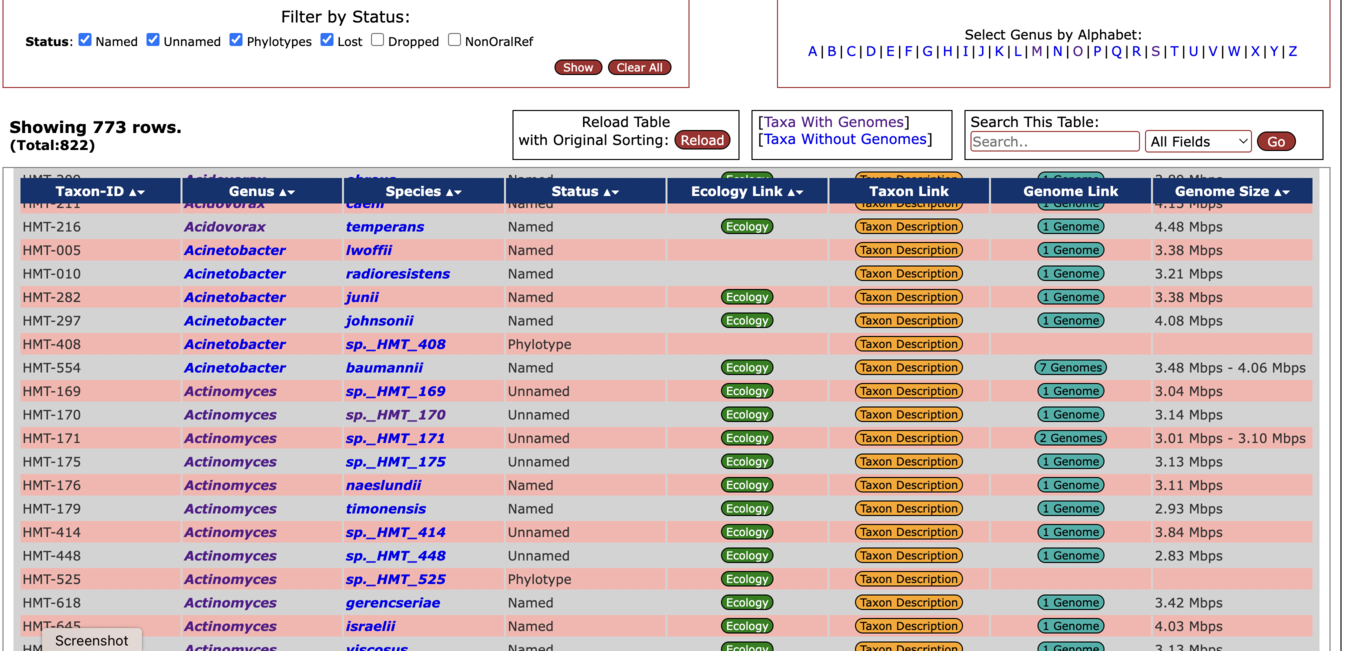
eHOMD provides comprehensive curated information on bacteria in the human mouth and aerodigestive tract.
Of the 836 taxa
in the database,
525
are primarily oral and
22
primarily nasal. Of the oral taxa, 49% are named, 21% unnamed but cultivated and 29% are known only as
uncultivated phylotypes.
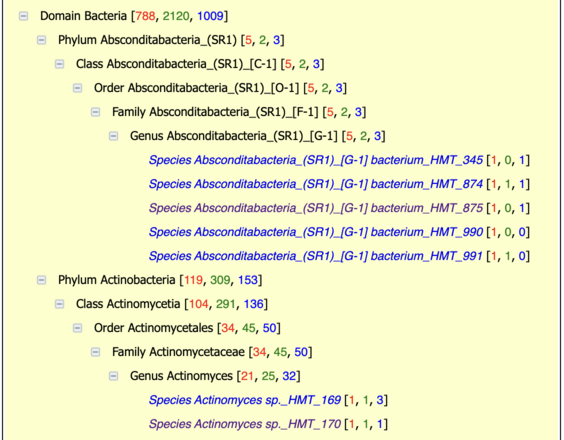
eHOMD taxonomy provides a provisional naming scheme for the currently unnamed taxa, based on both genomic
and 16S rRNA sequence phylogeny, so that strain, clone and probe data from any laboratory can be directly
linked to a stably named reference scheme.
Contributors:
Andrew Voorhis, Floyd E. Dewhirst, Jessica Mark Welch, Kathryn Kauffman,
Susan Yost, Susan Weir, Tina Yaskell, Tsute Chen, William G. Wade.
Past Contributors:
Abby Lakshmanan, Akila Ganesan, Alexandra Rybalka, Alice Kirega, Anne Tanner, Anuj Camanocha, Bruce J. Paster,
Cori Leonetti, Derek Spencer, Derrick Fouts, Emmanuel Mongodin, Erica Prosdocimi, Erin Klein, Fabiola Miranda-Sanchez, Griffin Weigle,
Hayley Thompson, Isabel Fernandez Escapa, Jacques Izard, Jessica Blanton, Katherine P. Lemon, Larry Yang, Maoxuan Lin,
Mollie Murname, Nezar Al-hebshi, Oxana Baranova, Prasad Gajare, Sonia Vartoukian, Stéphane Viala, Taylor Joyce, Wen-Han Yu, Yanmei Huang.
This Project Is Supported By:
Grant: RO1-DE016937;
"A Foundation for the Oral Microbiome and Metagenome"
from The National Institute of Dental and Craniofacial Research.